Google India
Industry
Technology (AI / Search)
Client
Google India
Service
Presentation Design
Duration
8 Weeks
Google was preparing for one of its most consequential annual announcements in India: a milestone event marking 20 years of Google's presence in the country, with new AI initiatives spanning public health, digital literacy, and regional language access.
The Moment
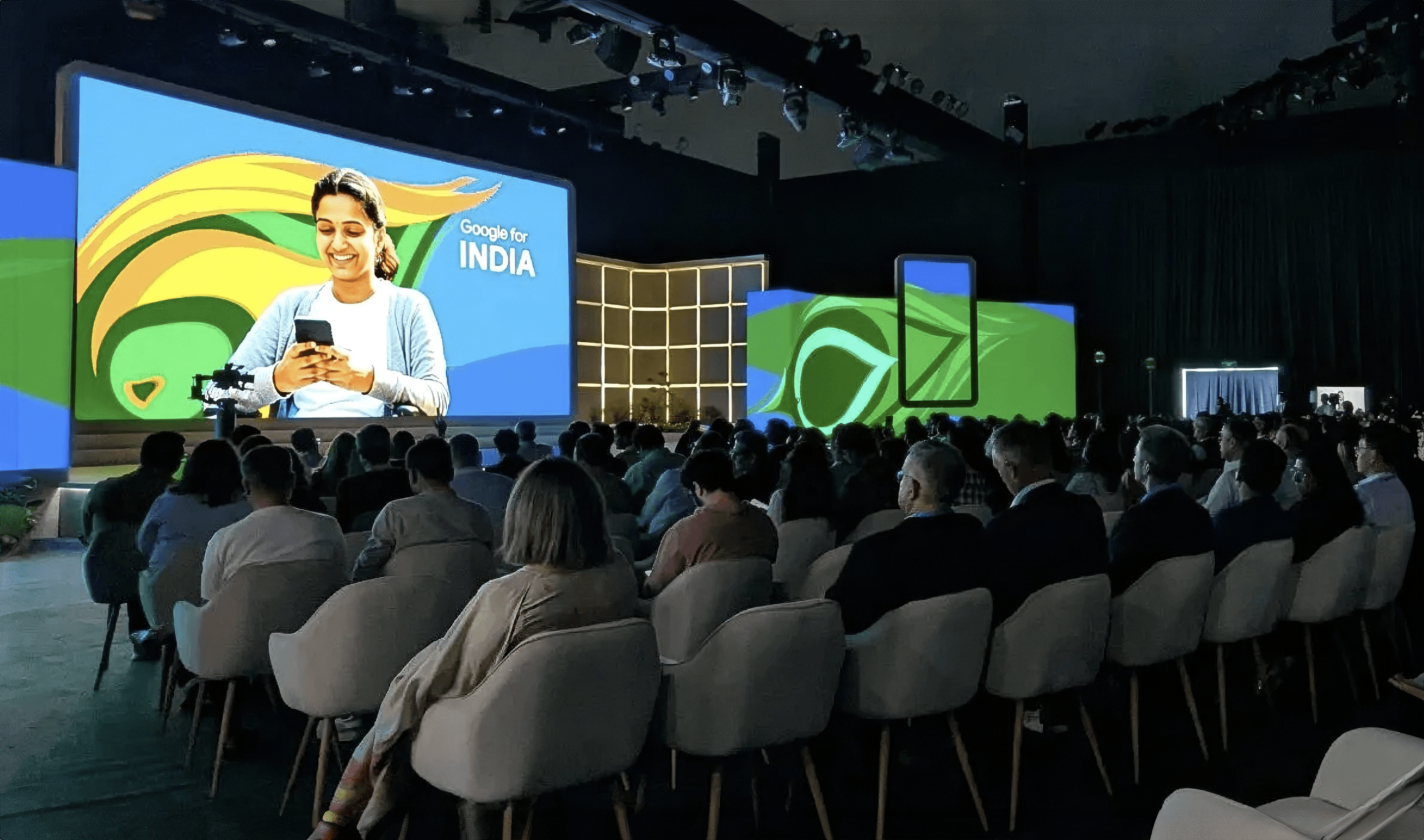
The stakes were high. The audience included government officials, startup founders, and global tech leadership. The existing draft was dense with technical and engineering language, and it lacked the visual clarity and narrative cohesion a moment that significant demanded.
My job was to turn a complex, multi-threaded announcement into a presentation that could carry the room.
The Constraint
The central challenge was not simplification for its own sake. It was precision. The deck needed to communicate meaningfully to a government health official, a startup founder, and a Silicon Valley VP simultaneously, without flattening the message for any of them. That is a design problem, not just a writing problem.
The content itself was also genuinely complex. Among the announcements: a partnership between Google, Ayushman Bharat Digital Mission, and India's National Health Authority to deliver AI-powered screenings for tuberculosis, lung cancer, and breast cancer at scale. A commitment to AI literacy for 10 million Indians. Regional language model rollouts affecting hundreds of millions of users. None of this could be reduced to a single slide without losing something critical.
The Approach
I treated the presentation as a UX challenge. The audience needed a clear cognitive path through material that was simultaneously technical, political, and human.
The first decision was structural. I reorganized the narrative arc to lead with human impact and defer engineering specifics to the appendix. Healthcare outcomes, digital equity, and creator economy growth came first. Architecture came later, for the stakeholders who needed it.
The second decision was visual. I converted regional adoption data and language model rollout metrics into clean, scannable infographics built strictly within Google's Material Design system. Every visual had to earn its place, either by clarifying data or by advancing the narrative. Decoration was not an option at a keynote of this scale.
The third decision was operational. I built a modular slide library so the executive team could swap regional metrics in and out depending on which stakeholder they were presenting to on any given day. The deck was not a single artifact. It was a flexible system.
The Outcome
The redesigned presentation became the core visual asset for Google India's 2024 milestone summit. Regional directors and global VP leadership approved it without a revision cycle that typically runs multiple rounds, cutting that process by 40%. The deck appeared on the main stage in front of thousands of tech leaders, government stakeholders, and developers attending live and digitally.
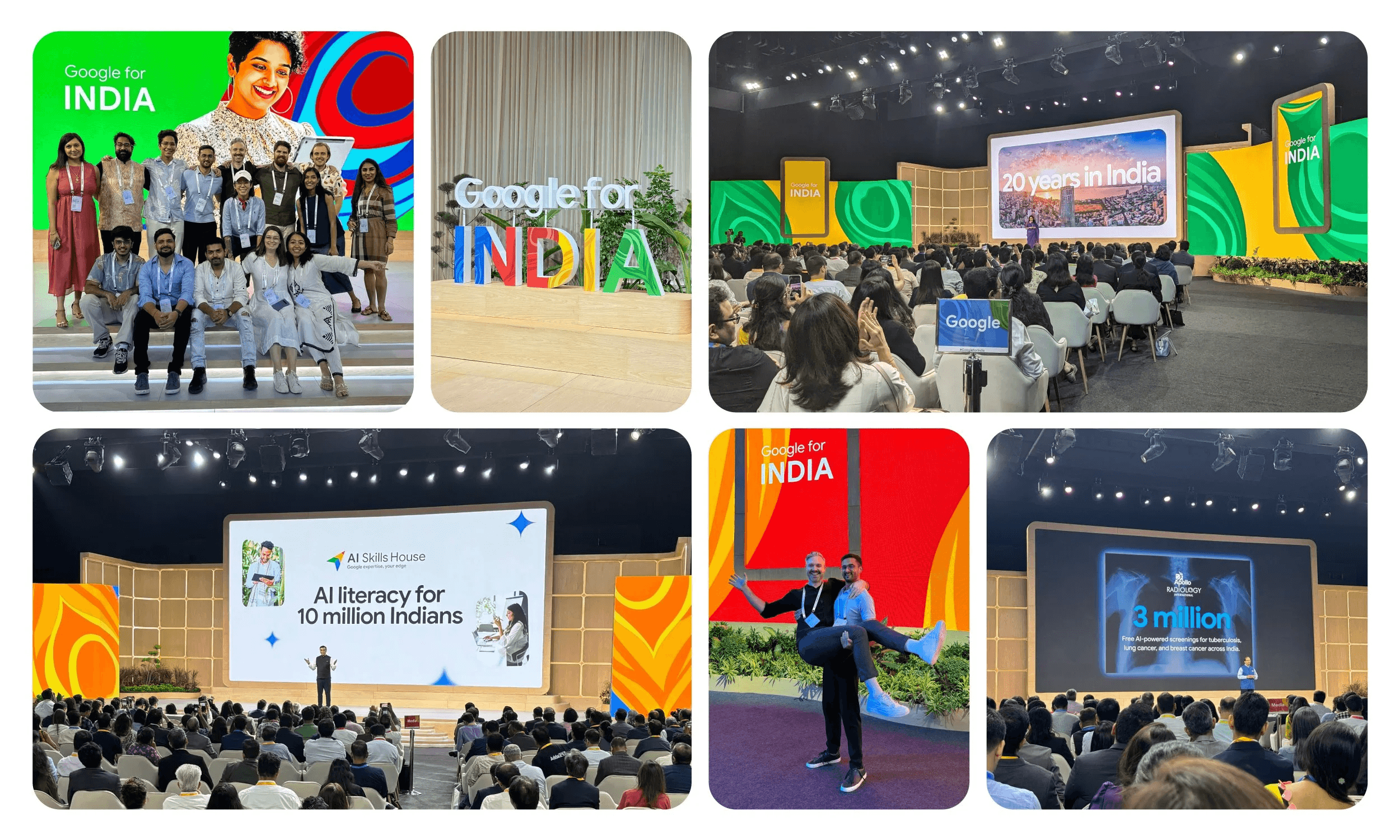
The modular system delivered operational value beyond the event itself, reducing future deck creation time for the India marketing team by 30%.
What This Work Proved
At the enterprise level, when you are announcing a government health partnership or an AI literacy initiative that reaches millions of people, the design cannot be decorative. It has to do real cognitive work for a room that holds people with completely different frames of reference. Applying UX thinking to presentation design is not a metaphor. It is a method. This project was proof of that.